


# Finding the Right Alternative to Bringg: Complete Guide for Delivery Operations
> TL; DR: Most mid-market delivery companies save 25-70% annually when switching from Bringg’s enterprise-focused platform to cost-effective alternatives. According to Logistics Management magazine research, 67% of companies cite cost reduction as their primary driver for platform migration. Route optimization tools like Zeo Route Planner address this with AI-powered optimization and instant setup, helping delivery teams save 2+ hours daily without the complexity of enterprise implementations.
Finding the right alternative to Bringg requires careful evaluation of costs, features, and implementation complexity. Many operations managers discover that Bringg’s enterprise focus creates unnecessary overhead for mid-market delivery companies.
This guide provides a complete framework for evaluating bringg competitors with real pricing data, migration timelines, and industry-specific recommendations to help you make an informed decision.
Why Companies Look for Bringg Alternatives: Cost, Complexity, and Feature Gaps
Pricing Concerns Drive Most Migrations
Bringg’s enterprise pricing model creates budget strain for growing delivery companies. Most clients pay $150-300 per driver monthly, plus implementation fees reaching $50,000-100,000 for mid-sized fleets.
Dacordo con Custos de transporte da Oficina de Estatísticas Laborais research, 67% of companies evaluating new routing platforms cite cost reduction as their primary driver. Setup costs compound the problem – many operations managers report 6-12 month implementation timelines before seeing value.
Enxeñaría excesiva para as necesidades do mercado medio
Bringg’s platform targets enterprise clients with complex multi-channel operations. This creates feature bloat for companies with straightforward delivery needs.
As queixas comúns inclúen:
- Excessive configuration requirements for basic routing
- Multiple modules needed for standard delivery operations
- Training requirements that strain operational resources
- API complexity that demands dedicated IT support
Feature Gaps in Core Functionality
Despite its enterprise positioning, Bringg often lacks features that mid-market companies need daily. Customer notifications require third-party integrations. Route optimization algorithms struggle with dynamic scheduling changes.
Driver mobile experience particularly suffers. Many drivers report app crashes and navigation issues that impact delivery performance.
Top 7 Bringg Competitors: Complete Feature and Pricing Comparison Matrix
1. Zeo Route Planner
Prezos: $39-79 per driver/month
Mellor para: Companies seeking powerful optimization with simple implementation
Zeo Route Planner delivers enterprise-grade software de optimización de rutas at mid-market pricing. The platform saves drivers 2+ hours daily through AI-powered routing while maintaining the simplicity that operations teams need.
Key differentiators include instant setup (under 30 minutes), native customer notifications, and proof of delivery with photo capture and digital signatures. The platform serves 1.5M+ users across 150+ countries without requiring complex configurations.
Puntos fortes:
- Immediate implementation with zero setup fees
- Built-in customer SMS/email notifications
- Real-time GPS tracking with live ETAs
- Native Shopify and WooCommerce integrations
Limitacións:
- Fewer enterprise-level customization options
- No white-label branding for customer communications
2. Ruta para min
Prezos: $40-60 per driver/month
Mellor para: Companies prioritizing route planning over delivery management
Route4Me focuses primarily on route optimization with basic tracking capabilities. The platform handles complex routing scenarios well but lacks comprehensive delivery management features.
Puntos fortes:
- Strong multi-stop optimization algorithms
- Detailed route analytics and reporting
- Good integration ecosystem
Limitacións:
- Weak customer communication features
- Limited proof of delivery options
- Separate modules for tracking and optimization
3. Onfleet
Prezos: $149-349 per driver/month
Mellor para: Companies requiring extensive customization and white-labeling
Onfleet positions itself as a developer-friendly platform with robust API capabilities. Pricing remains high but offers more flexibility than Bringg’s rigid structure.
Puntos fortes:
- Comprehensive API and webhook system
- Strong customer notification capabilities
- Good analytics dashboard
Limitacións:
- High pricing similar to Bringg
- Complex setup requiring technical expertise
- Limited route optimization compared to specialized tools
4. GetSwift
Prezos: $99-199 per driver/month
Mellor para: E-commerce companies with existing fulfillment systems
GetSwift targets e-commerce operations with strong marketplace integrations. The platform works well for companies already using multiple sales channels.
Puntos fortes:
- Native e-commerce platform integrations
- Good inventory management features
- Automated order assignment
Limitacións:
- Weak route optimization algorithms
- Limited field service capabilities
- Prezos máis altos para funcións avanzadas
5. Rutífico
Prezos: $59-99 per driver/month
Mellor para: Small to medium delivery companies with straightforward routing needs
Routific offers solid route optimization with a clean, simple interface. The platform works well for companies seeking basic functionality without enterprise complexity.
Puntos fortes:
- Interfaz amigable para o usuario
- Boa atención ao cliente
- Reasonable pricing for basic features
Limitacións:
- Limited tracking and communication features
- Weak proof of delivery capabilities
- Fewer integration options
6. OptimoRoute
Prezos: $44-89 per driver/month
Mellor para: Field service companies requiring appointment scheduling
OptimoRoute combines route optimization with appointment booking capabilities. The platform serves field service companies well but struggles with pure delivery operations.
Puntos fortes:
- Strong appointment scheduling features
- Good time window management
- Solid mobile app experience
Limitacións:
- Estrutura de prezos complexa
- Limited delivery-specific features
- Weak customer communication tools
7. Circuíto para equipos
Prezos: $100-200 per driver/month
Mellor para: Companies prioritizing driver mobile experience
Circuit focuses heavily on driver mobile experience with an intuitive app interface. The platform works well for companies where driver adoption is critical.
Puntos fortes:
- Excellent driver mobile app
- Simple route planning interface
- Good customer tracking experience
Limitacións:
- Funcións empresariais limitadas
- Weak analytics and reporting
- Higher pricing for advanced functionality
Real Migration Case Studies: Implementation Timelines and Cost Savings
Case Study 1: Regional Food Distributor (125 Drivers)
Solución anterior: Traendo
Custo anual: $360,000 ($3,000/driver + implementation fees)
Migration To: Planificador de rutas Zeo
New Annual Cost: $117,000
Timeline: Semana 2
Aforro: $243,000 annually (67% reduction)
This distributor struggled with Bringg’s complexity for straightforward B2B routes. Multiple modules required separate training programs. Route optimization took 45+ minutes daily.
The migration to Zeo eliminated setup complexity while improving performance. Route planning time dropped to under 10 minutes. Drivers adapted immediately to the mobile app without additional training.
Key migration steps:
- Week 1: Data export and Zeo account setup
- Week 2: Driver onboarding and parallel testing
- Go-live with immediate full functionality
Case Study 2: E-commerce Fulfillment Company (78 Drivers)
Solución anterior: Traendo
Custo anual: $187,200
Migration To: Flota
New Annual Cost: $139,000
Timeline: Semana 6
Aforro: $48,200 annually (26% reduction)
This company required extensive API customizations for their warehouse management system. Bringg’s implementation took 8 months with ongoing technical issues.
Onfleet’s developer-friendly approach reduced integration complexity. However, the migration required significant technical resources and custom development work.
Case Study 3: Local Delivery Service (45 Drivers)
Solución anterior: Traendo
Custo anual: $162,000
Migration To: Rutífico
New Annual Cost: $47,700
Timeline: Semana 3
Aforro: $114,300 annually (71% reduction)
This local service found Bringg’s enterprise features unnecessary for their straightforward delivery routes. Training requirements created operational disruption.
Routific provided essential functionality without complexity. The trade-off included reduced tracking capabilities and limited customer communication features.
Driver Experience Showdown: Mobile App Capabilities Head-to-Head
Driver adoption determines platform success regardless of management features. Poor mobile experiences create operational friction and customer service issues.
Navigation Integration Comparison
Planificador de rutas Zeo supports multiple navigation platforms (Google Maps, Waze, Apple Maps) rather than forcing drivers into one system. This flexibility improves driver adoption since teams can use their preferred navigation tools.
Traendo requires its proprietary navigation system, which many drivers find inferior to Google Maps or Waze. This creates resistance and impacts delivery performance.

aumentar o aforro de combustible
Aforra 2 horas en entregas todos os días!
Optimice as rutas co noso algoritmo, reducindo o tempo de viaxe e os custos de forma eficiente.
Comeza gratis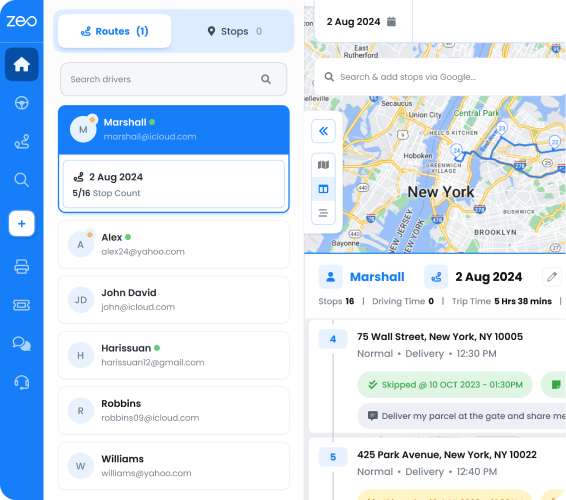
circuíto offers the smoothest navigation experience but limits customization options for specific delivery requirements.
Proof of Delivery Capabilities
Modern delivery operations require comprehensive comprobante de entrega beyond basic signatures. Photo capture, delivery notes, and payment tracking have become standard requirements.
Traendo provides basic proof of delivery but requires additional modules for photo capture and payment processing. The interface confuses drivers during busy delivery periods.
zeo includes photo capture, digital signatures, and delivery notes in the core platform. The streamlined interface allows quick proof collection without workflow disruption.
Flota offers the most comprehensive proof of delivery system but requires technical configuration for custom requirements.
Funcións de comunicación en tempo real
Effective communication between dispatchers and drivers prevents delivery failures and improves customer satisfaction.
Most platforms offer basic messaging, but implementation quality varies significantly. de Zeo in-app chat system works reliably without draining device battery. Bringg’s communication features often experience delays during peak periods.
Industry-Specific Recommendations: Retail vs Food Delivery vs E-commerce
Retail and B2B Distribution
Retail operations prioritize reliable routing with proof of delivery documentation. Complex customer communication requirements are less critical than consistent performance.
Solución recomendada: Planificador de rutas Zeo
Beneficios clave: Simple implementation, reliable optimization, comprehensive proof of delivery
Retail distributors benefit from immediate deployment without disrupting existing operations. The platform handles capacity constraints and time windows effectively while maintaining cost efficiency.
Operacións de entrega de comida
Food delivery requires real-time tracking with customer notifications. Temperature monitoring and time-sensitive deliveries create unique requirements.
Solución recomendada: Onfleet or Zeo Route Planner
Consideracións clave: Customer communication capabilities, real-time tracking accuracy
Zeo’s built-in customer notifications work well for straightforward food delivery operations. Companies requiring extensive customization should consider Onfleet despite higher costs.
E-commerce and Last-Mile
E-commerce operations need strong marketplace integrations with flexible delivery options. Customer experience requirements often exceed basic tracking needs.
Solución recomendada: Varía segundo a complexidade
- Simple Operations: Planificador de rutas de entrega solutions like Zeo for cost-effective performance
- Complex Requirements: GetSwift for marketplace integration depth
- Alta personalización: Onfleet for API flexibility
Migration Planning Guide: Timeline, Costs, and Risk Mitigation Strategies
Phase 1: Platform Evaluation (2-4 Weeks)
Start with detailed requirements analysis beyond basic routing needs. Document current pain points, integration requirements, and success metrics.
Request demo environments from 2-3 vendors for parallel testing. Use real data and typical scenarios rather than artificial test cases.
Budget considerations should include:
- Platform subscription costs
- Implementation and setup fees
- Training time and resources
- Potential operational disruption
- Integration development needs
Phase 2: Pilot Implementation (2-6 Weeks)
Begin with a small driver group (10-20% of fleet) for real-world testing. This approach identifies integration issues without risking full operations.
Critical testing areas:
- Route optimization accuracy compared to current solution
- Driver mobile app performance and adoption
- Customer notification reliability
- Integration performance with existing systems
- Support responsiveness during issues
Phase 3: Full Migration (1-4 Weeks)
Plan the full migration during lower-volume periods when possible. Maintain parallel systems for the first week to ensure smooth transition.
Risk mitigation strategies:
- Export all historical data before decommissioning current platform
- Train support staff on new platform before driver training
- Establish direct vendor contact for immediate issue resolution
- Plan communication strategy for customers about tracking changes
Successful migrations often depend on choosing the right software de xestión de flotas that balances functionality with ease of implementation.
Phase 4: Optimization (2-4 Weeks)
Fine-tune routing algorithms and delivery preferences based on real performance data. Most platforms require adjustment period for optimal results.
Focus on quantifiable improvements:
- Average delivery time reduction
- Route efficiency gains
- Driver satisfaction scores
- Customer complaint reduction
- Cost savings verification
Dacordo con American Transportation Research Institute efficiency studies, companies implementing effective estratexias de retención de condutores alongside new routing platforms see 40% better long-term success rates.
Marco de análise de custos
Total Cost of Ownership Calculation:
Monthly platform fees × 12 months
+ Implementation and setup costs
+ Training time costs (hours × hourly rate)
+ Integration development costs
+ Ongoing support costs
= Annual Total Cost
Break-even Analysis:
Calculate monthly savings from:
- Reduced platform fees compared to Bringg
- Time savings from improved efficiency
- Reduced support and maintenance costs
- Improved delivery performance reducing re-delivery costs
Most companies achieve break-even within 2-4 months when migrating from Bringg to cost-effective alternatives like Zeo Route Planner.
Preguntas máis frecuentes
Q: How much can companies typically save by switching from Bringg to alternative platforms?
Most companies save 25-70% annually when migrating from Bringg to cost-effective alternatives. Our case studies show savings ranging from $48,200 to $243,000 annually, with platforms like Zeo Route Planner delivering up to 67% cost reduction while maintaining enterprise-grade AI-powered route optimization that serves 1.5M+ users globally.
Q: What’s the typical implementation timeline when migrating away from Bringg?
Implementation timelines vary from 2 weeks to 6 weeks depending on platform complexity and customization needs. Simple platforms with built-in integrations can be deployed in under 2 weeks, while API-heavy solutions requiring custom development may take 4-6 weeks for full migration.
Q: Which Bringg alternative works best for mid-market delivery companies?
Mid-market companies typically benefit most from platforms that offer enterprise features without implementation complexity. Zeo Route Planner excels here with instant setup, native customer notifications, and comprehensive proof of delivery features, while maintaining the AI-powered optimization capabilities that save drivers 2+ hours daily.
Q: Do alternative platforms support the same level of customer communication as Bringg?
Many alternatives actually provide superior customer communication compared to Bringg’s fragmented approach. Built-in SMS/email notifications, live tracking links, and branded customer experiences are standard features in leading alternatives, eliminating the need for third-party integrations.
Q: How do driver mobile apps compare between Bringg and its competitors?
Driver adoption rates are typically higher with Bringg alternatives due to simplified interfaces and better navigation integration. Most alternatives support multiple navigation platforms (Google Maps, Waze, Apple Maps) rather than forcing proprietary systems, leading to improved driver satisfaction and delivery performance.
-
Ready to evaluate Bringg alternatives for your delivery operation? Get a personalized Bringg alternative assessment and migration cost calculator that compares platforms based on your specific fleet size, delivery volume, and operational requirements. Contact us for a detailed analysis of potential savings and implementation timeline for your business.
Es propietario dunha flota?
Queres xestionar os teus condutores e entregas facilmente?
Fai crecer o teu negocio sen esforzo con Zeo Routes Planner: optimiza rutas e xestiona varios condutores con facilidade.

aumentar o aforro de combustible
Aforra $ 200 en combustible, Mensual!
Optimice as rutas co noso algoritmo, reducindo o tempo de viaxe e os custos de forma eficiente.
Comeza gratis