


# Finding the Right Bringg Competitors for Your Delivery Operation
> TL; DR: Mid-size delivery companies switch from Bringg primarily due to implementation complexity, high costs, and enterprise-focused features they don’t need. Gipakita sa pananaliksik that route optimization platforms like Zeo Route Planner address these pain points with AI-powered optimization and intuitive interfaces, helping delivery teams save 2+ hours daily without the complexity.
Finding the right Bringg competitors for your delivery operation isn’t just about features on paper. It’s about real implementation costs, migration headaches, and whether your drivers will actually use the mobile app without constant complaints.
Mid-size delivery companies face unique challenges when evaluating alternatives to Bringg. You need enterprise-level features without enterprise-level complexity or costs. You want proven reliability without paying for capabilities you’ll never use.
This guide breaks down the top seven Bringg competitors with real implementation data, migration timelines, and honest assessments of what each platform actually delivers in practice.
Why Companies Switch Away from Bringg: Common Pain Points and Triggers
Implementation Complexity Overwhelms Operations Teams
Bringg’s enterprise focus creates complexity that many mid-size companies don’t need. Operations managers report 6-12 month implementation timelines with extensive IT resources required for integration and customization.
The platform requires dedicated technical staff to manage ongoing configurations. Companies with 20-200 drivers often lack the IT infrastructure to maximize Bringg’s capabilities, leading to underutilized expensive features.
Cost Structure Doesn’t Match Mid-Size Budgets
Bringg’s pricing targets enterprise clients with corresponding budgets. According to mga taho sa industriya, mid-size delivery companies typically allocate 3-7% of revenue to technology solutions, while Bringg’s total cost of ownership often exceeds this threshold.
Hidden costs emerge during implementation: custom integration fees, training requirements, and ongoing support needs that weren’t apparent during initial demos.
Feature Gaps for Specific Use Cases
Some companies discover missing capabilities only after implementation begins. Common gaps include limited proof of delivery options, insufficient driver management tools, or weak integration with existing e-commerce platforms.
The platform’s focus on large enterprise clients means feature development doesn’t always align with mid-size company priorities like simple driver onboarding or basic customer notification systems.
Top 7 nga mga Kakompetensya sa Bringg: Feature-by-Feature Comparison Matrix
1. Zeo nga Plano sa Ruta
Zeo Route Planner delivers enterprise-level optimization with mid-size company simplicity. The platform serves over 1.5 million users across 150+ countries, focusing specifically on companies that need powerful features without overwhelming complexity.
Pangunang mga Kalig-on:
- Ang pag-optimize sa ruta nga gipadagan sa AI makadaginot og 2+ ka oras kada adlaw matag drayber
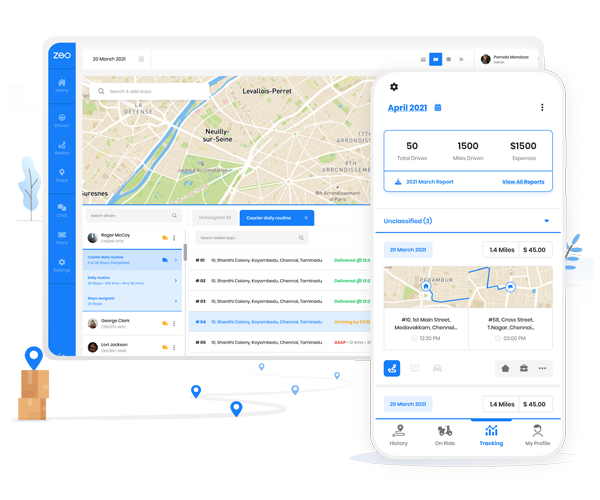
- Dobleng plataporma nga pamaagi: web dashboard para sa mga fleet manager, mobile app para sa mga drayber
- Real-time GPS tracking with live ETA updates and customer notifications
- Pagpamatuod sa paghatud with photo capture, digital signatures, and delivery notes
- Direktang integrasyon sa Shopify, WooCommerce, ug HubSpot
Pagpatuman: 1-2 weeks typical deployment with bulk address import from Excel, CSV, or Google Sheets.
2. Ruta4Me
Route4Me targets smaller operations with basic optimization needs. The platform offers route planning and tracking but lacks advanced features like skill-based driver assignment or sophisticated proof of delivery options.
limitasyon: Basic mobile app interface, limited customer communication features, and minimal integration options beyond standard APIs.
3. OptimoRoute
OptimoRoute focuses heavily on time window optimization and capacity constraints. Strong for delivery operations with complex scheduling requirements but weaker on driver management and customer communication features.
Implementation challenges: Requires significant configuration for optimal performance, with 4-8 week typical setup timelines.
4. Onfleet
Onfleet provides solid last-mile delivery features with good API documentation for custom integrations. However, costs can escalate quickly with driver count, and the platform lacks some field service capabilities.
Konsiderasyon sa gasto: Per-task pricing model can become expensive for high-volume operations compared to per-driver alternatives.
5. Tigdumala sa Ruta sa Workwave
Workwave offers comprehensive route optimization with strong reporting capabilities. The platform handles complex multi-day routing but has a steeper learning curve for daily operations staff.
Trade-off: More features mean more complexity, requiring dedicated training time for optimal adoption.
6. GetSwift
GetSwift provides good delivery tracking and customer notifications but has limited optimization capabilities for larger fleets. Better suited for companies under 50 drivers with straightforward routing needs.
7. Tookan
Tookan offers white-label solutions with extensive customization options. Strong for companies needing branded customer experiences but requires technical resources for implementation and maintenance.
Implementation Reality Check: Migration Timelines and Hidden Costs for Each Platform
Pagkakomplikado sa Pagbalhin sa Datos
Every platform handles data migration differently. Some require manual CSV uploads while others offer automated import tools. Plan for 2-4 weeks of data preparation regardless of chosen platform.
Ang software sa pag-optimize sa ruta like Zeo Route Planner simplifies this process with bulk address import capabilities and favorites management for frequently used stops, reducing initial setup time to 1-2 weeks.
Mga Kinahanglanon sa Pagbansay pinaagi sa Plataporma
Driver adoption varies significantly across platforms. Complex interfaces require 4-6 hours of training per driver, while intuitive mobile apps need minimal onboarding.
Budget 2-3 hours per driver for initial training, with additional support time during the first month of operation.
Integration Setup Costs
API integrations range from simple plug-and-play connections to custom development projects costing $10,000-50,000. Evaluate existing software dependencies before platform selection.
Direct e-commerce integrations eliminate custom development needs. Platforms with native Shopify or WooCommerce connections save both time and integration costs.
Driver Experience Showdown: Mobile App Usability Across Competing Platforms
Mobile Interface Design Impact
Driver acceptance determines platform success more than management features. Poor mobile experiences lead to resistance, workarounds, and operational inefficiency.
Test mobile apps with actual drivers during evaluation. Features that seem simple to operations managers often prove confusing in real-world delivery scenarios.
Mga Kaarang sa Pamatuod sa Paghatud
Essential features include photo capture, signature collection, and delivery notes. Advanced platforms add payment tracking for cash-on-delivery operations and customer notification automation.
Modernong software sa pagsubay sa drayber provides intuitive proof of delivery collection with photo capture and digital signatures, seamlessly syncing data back to fleet managers without requiring technical training.

dugangan ang pagdaginot sa gasolina
Pagtipig 2 Oras sa Paghatud, Adlaw-adlaw!
I-optimize ang mga ruta gamit ang among algorithm, pagkunhod sa oras sa pagbiyahe ug gasto nga epektibo.
Pagsugod alang sa Free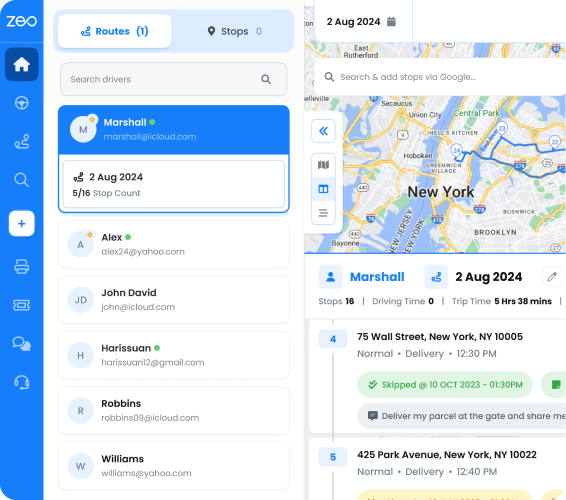
Navigation Integration
Multiple navigation app support (Google Maps, Waze, Apple Maps) accommodates driver preferences and improves adoption rates. Single-provider solutions create friction for drivers accustomed to specific navigation interfaces.
Industry-Specific Recommendations: Best Bringg Alternative by Business Type and Size
Food Delivery Operations (20-100 Drivers)
Priority features: Speed optimization, customer notifications, proof of delivery, and time window management for hot food delivery requirements.
Labing maayo nga angay: Platforms with strong customer communication features and fast route recalculation for last-minute order changes.
E-commerce Last-Mile (50-200 Drivers)
Essential capabilities: E-commerce platform integration, capacity-based routing for package volumes, and comprehensive tracking for customer service teams.
Software sa pagdumala sa armada with direct Shopify and WooCommerce integrations automatically imports order data with customer details and delivery requirements, eliminating manual data entry.
Field Service Operations (30-150 Technicians)
Required features: Skill-based assignment, service time windows, proof of service documentation, and customer notification systems for appointment management.
Look for platforms supporting technician skill matching and service completion documentation beyond basic delivery confirmation.
Multi-Service Operations
Companies handling both deliveries and service calls need flexible platforms supporting different operational workflows within single driver routes.
Making the Switch: Step-by-Step Migration Strategy to Minimize Disruption
Hugna 1: Pilot Testing (Semana 1-2)
Start with 10-15% of your fleet to test real-world performance. Include drivers from different experience levels to assess adoption challenges across your team.
Set specific success metrics: route efficiency improvement, driver satisfaction scores, and customer complaint reduction.
Phase 2: Data Preparation (Weeks 2-3)
Clean existing customer databases, standardize address formats, and prepare historical route data for migration. This preparation time investment pays dividends in platform performance.
Document current operational workflows to identify required customizations or training adjustments.
Hugna 3: Bug-os nga Pag-deploy (Semana 3-4)
Roll out platform access to remaining drivers with dedicated support during the first week. According to logistics industry studies, companies see 15-25% efficiency improvements within 30 days of proper route optimization implementation.
The best route planner app for business implementations include dedicated support during the first week to ensure smooth adoption across all driver experience levels.
Schedule follow-up training sessions for drivers struggling with new mobile interfaces.
Phase 4: Optimization (Weeks 4-6)
Fine-tune routing parameters, adjust driver assignments, and optimize customer notification settings based on real operational data.
Most platforms require 4-6 weeks to reach optimal performance as algorithms learn from your specific operational patterns.
Minimizing Customer Impact
Maintain existing customer communication methods during transition. Introduce new tracking features gradually rather than changing all customer touchpoints simultaneously.
Test customer notification systems thoroughly before full deployment to avoid service disruption during critical business periods.
Kanunayng Gipangutana nga mga Pangutana
P: Unsa ang mga nag-unang hinungdan nganong ang mga kompanya mobalhin gikan sa Bringg ngadto sa mga kakompetensya?
The primary reasons include implementation complexity requiring 6-12 months with extensive IT resources, cost structures that exceed mid-size company budgets (often surpassing 3-7% of revenue allocation), and feature gaps for specific use cases like basic driver management or e-commerce integrations. Many companies also struggle with the platform’s enterprise focus when they need simpler, more intuitive solutions.
Q: How long does it typically take to migrate from Bringg to a new route optimization platform?
Most migrations take 4-6 weeks for full deployment, including data preparation, pilot testing, and team training. However, platforms like Zeo Route Planner can reduce this timeline to 1-2 weeks with bulk address import capabilities and intuitive mobile interfaces that require minimal driver training.
Q: What features should mid-size companies prioritize when evaluating Bringg alternatives?
Focus on AI-powered route optimization, real-time GPS tracking, proof of delivery capabilities, and direct e-commerce integrations. Essential features include capacity-based routing, time window management, customer notifications, and mobile apps that drivers can use without extensive training.
Q: How much can companies save by switching to a more cost-effective Bringg competitor?
Companies typically see 15-25% efficiency improvements within 30 days of implementing proper route optimization. Zeo Route Planner users report saving 2+ hours daily per driver while reducing total technology costs compared to enterprise-focused platforms like Bringg.
Q: Which Bringg alternative works best for companies with both delivery and field service operations?
Look for platforms that support flexible workflows within single driver routes, skill-based assignment capabilities, and comprehensive proof of service documentation. The platform should handle different operational requirements like delivery confirmations and service completion documentation seamlessly.
Ready to evaluate Zeo Route Planner for your operation? Start your free trial to test our platform risk-free before making your final decision. Experience firsthand how AI-powered optimization and intuitive mobile interfaces can transform your delivery operations without the complexity and costs of enterprise-focused alternatives.
Tag-iya ba ka sa fleet?
Gusto sa pagdumala sa imong mga drayber ug mga paghatod nga dali?
Pauswaga ang imong negosyo nga walay kahago sa Zeo Routes Planner - pag-optimize sa mga ruta ug pagdumala sa daghang mga drayber nga dali.

dugangan ang pagdaginot sa gasolina
Pagtipig og $200 sa gasolina, Kada bulan!
I-optimize ang mga ruta gamit ang among algorithm, pagkunhod sa oras sa pagbiyahe ug gasto nga epektibo.
Pagsugod alang sa Free