


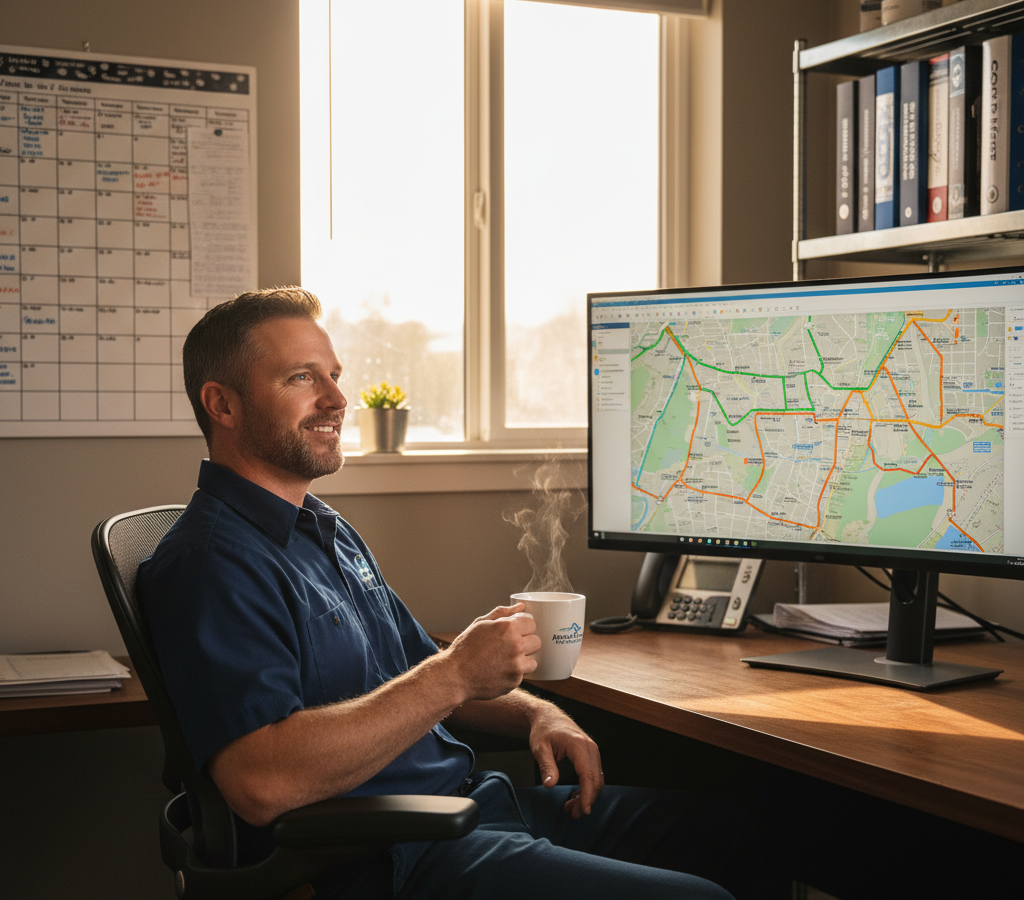
Guide logiciel d'optimisation des itinéraires des camions de vidange de fosses septiques : Réduisez votre temps de trajet de 30 %
> TL; DR: Les logiciels d'optimisation d'itinéraires pour camions de vidange de fosses septiques réduisent le temps de trajet de 30 % grâce à une optimisation basée sur l'IA qui coordonne les visites des sites d'élimination des déchets avec les itinéraires des clients. La planification manuelle des itinéraires entraîne une perte de 40 % de temps de conduite supplémentaire et des lacunes dans la documentation de conformité. Les solutions d'optimisation d'itinéraires avancées comme Zeo Route Planner répondent à ces problématiques grâce à un routage basé sur la capacité et un suivi GPS en temps réel, permettant aux équipes d'intervention de gagner plus de 2 heures par jour.
Gérer une entreprise d'assainissement, c'est comme jouer à Tetris avec les créneaux horaires, les sites d'évacuation et les interventions d'urgence. Il faut jongler entre les vidanges chez les particuliers, l'entretien des locaux commerciaux et les débordements imprévus, tandis que les camions sillonnent la ville en consommant du carburant et en perdant de l'argent.
Le problème ne vient ni de vos chauffeurs ni de votre matériel. C'est la planification manuelle des itinéraires qui transforme chaque jour en chaos. logiciel de planification d'itinéraires pour camions septiques Cela change complètement la donne, réduisant le temps de déplacement de 30 % tout en rationalisant le suivi de la conformité et la logistique d'élimination.
Pourquoi la planification traditionnelle des itinéraires de fosse septique échoue (et vous coûte de l'argent)
Votre répartiteur imprime les adresses à 6 h du matin, les distribue aux chauffeurs et croise les doigts. Cette méthode fonctionnait avec deux camions. Avec cinq ou plus, elle est synonyme de pertes considérables.
Les coûts cachés du routage manuel
Chaque itinéraire inefficace vous coûte cher à plusieurs égards. Vos camions passent 40 % de temps en plus à faire des allers-retours entre les chantiers au lieu de générer des revenus. Selon… Environmental Protection AgencyEn moyenne, une vidange de fosse septique prend 45 minutes, mais un mauvais itinéraire ajoute 20 à 30 minutes de trajet entre les arrêts.
Les appels d'urgence bouleversent votre planning. Lorsqu'un client particulier a besoin d'un véhicule de remplacement, vous envoyez le camion disponible le plus proche, sauf que vous ignorez lequel. Votre chauffeur passe 45 minutes à se rendre sur une intervention qu'un autre camion aurait pu effectuer en 15 minutes.
Le cauchemar de la coordination des sites d'élimination
Les camions de vidange ne peuvent pas simplement passer d'un chantier à l'autre comme des véhicules de livraison. Chaque camion doit se coordonner avec installations d'élimination des déchetsCes sites ont leurs propres horaires d'ouverture et limites de capacité. La planification manuelle fait que les camions passent souvent devant les sites d'élimination des déchets pour ensuite faire demi-tour une fois les réservoirs pleins.
Vos chauffeurs décident du moment opportun pour vider les réservoirs, en raccourcissant parfois leurs trajets pour atteindre les sites de traitement avant la fermeture. D'autres fois, ils commencent la journée suivante avec des réservoirs partiellement pleins, ce qui réduit la capacité de travail pour la journée.
Lacunes en matière de documentation de conformité
Le Ministère des Transports Un système de suivi des déchets nécessite des registres détaillés. Les systèmes manuels reposent sur des carnets papier remplis par les chauffeurs entre chaque tournée. L'absence de signatures, l'horodatage incomplet et l'écriture illisible engendrent des risques de non-conformité lors des inspections.
Lorsqu'un client conteste les dates ou la qualité du service, il faut éplucher des reçus papier et des notes manuscrites. Prouver la réalisation du service devient alors une enquête fastidieuse au lieu d'une simple recherche dans une base de données.
Fonctionnalités essentielles que tout logiciel de planification d'itinéraires pour camions de vidange de fosses septiques doit posséder
Les logiciels de planification d'itinéraires ne prennent pas tous en compte les exigences spécifiques des services d'assainissement. Les itinéraires de livraison standard ne proposent pas toutes les fonctionnalités essentielles dont les entreprises d'assainissement ont besoin au quotidien.
Optimisation multi-étapes avec contraintes d'élimination
Votre logiciel de planification d'itinéraires doit tenir compte des contraintes liées à l'exploitation des fosses septiques : les camions se remplissent et doivent être vidés. Le système doit automatiquement intégrer l'emplacement des sites d'élimination, les heures d'ouverture et la capacité de vos camions lors de la création des itinéraires.
Un logiciel de gestion de la qualité calcule le moment où chaque camion atteindra sa capacité maximale en fonction du type d'intervention. Une vidange de 1 500 gallons chez un particulier a un impact différent sur l'itinéraire qu'une intervention de maintenance de 500 gallons. Le système ajuste les arrêts restants en conséquence.
Intégration des appels d'urgence
Les interventions d'urgence pour fosses septiques ne peuvent attendre. Votre logiciel doit connaître la position des conducteurs en temps réel et recalculer instantanément les itinéraires. En cas d'urgence nécessitant une intervention de renfort, le système doit identifier le camion disponible le plus proche et adapter automatiquement les itinéraires des deux conducteurs.
Les meilleurs systèmes appliquent des protocoles d'intervention d'urgence distincts tout en protégeant les clients ayant une réservation régulière contre les retards excessifs. Ils calculent l'impact sur les horaires d'arrivée et suggèrent les arrêts à reprogrammer si nécessaire.
Gestion des fenêtres horaires
Les clients résidentiels spécifient souvent des plages horaires de disponibilité précises. Les comptes commerciaux peuvent nécessiter une intervention avant ou après les heures de bureau. Votre logiciel de planification d'itinéraires doit respecter ces contraintes tout en optimisant les temps de trajet.
Les systèmes avancés détectent les conflits potentiels en amont. Si un client demande une prestation entre 2 h et 4 h, mais que votre itinéraire optimisé vous fait traverser la ville à 2 h, le logiciel signale cette impossibilité lors de la planification de l'itinéraire, et non lorsque votre chauffeur arrive en retard.
Preuve de signification
Ressources preuve de livraison Ce système élimine les contraintes administratives et les problèmes de conformité. Il doit capturer des photos, des signatures numériques et des notes de service détaillées à chaque arrêt. L'horodatage GPS assure une vérification automatique de la localisation et de l'heure.
Zeo Route Planner résout ce problème en combinant la capture de photos, les signatures numériques et l'horodatage GPS dans un système unique de preuve de livraison auquel les chauffeurs accèdent directement sur leurs appareils mobiles. La documentation est automatiquement synchronisée avec vos systèmes informatiques pour un accès immédiat lors des demandes de renseignements des clients ou des audits de conformité.
Outils de communication de flotte
Votre répartiteur a besoin d'une visibilité en temps réel sur la position des camions, l'avancement des trajets et les heures d'arrivée estimées. Les chauffeurs ont besoin de moyens de communication instantanés pour poser des questions ou obtenir des mises à jour, sans avoir à se renvoyer la balle au téléphone.
Moderne logiciel de suivi des conducteurs Ce service assure le suivi GPS en temps réel avec notifications automatiques aux clients. Lorsque votre chauffeur termine sa course précédente plus tôt que prévu, les clients reçoivent automatiquement une mise à jour de leur heure d'arrivée, ce qui améliore leur satisfaction et réduit les appels téléphoniques au bureau.
Calculateur de retour sur investissement : Combien un logiciel de routage de fosses septiques peut-il économiser à votre entreprise ?
Calculons des chiffres concrets basés sur les opérations typiques d'entretien des fosses septiques. Ces économies s'accumulent quotidiennement sur l'ensemble de votre flotte.
Analyse des gains de temps
Une flotte de cinq camions permet généralement de gagner 2 à 3 heures par jour et par camion grâce à l'optimisation des itinéraires. À 75 $ l'heure pour le coût du camion et du chauffeur, cela représente une économie quotidienne de 150 à 225 $ par camion, soit de 750 à 1 125 $ pour l'ensemble de votre flotte.
Sur une année, ces économies totalisent entre 195 000 $ et 292 500 $ pour cinq camions. Les plus grandes entreprises de services d'assainissement font état d'économies encore plus importantes à mesure que la taille de leur flotte augmente et que les algorithmes d'optimisation ajustent leurs itinéraires. meilleures pratiques d'optimisation d'itinéraire amplifie encore davantage ces résultats.
Réduction des coûts de carburant
Les camions de vidange de fosses septiques consomment en moyenne 6 à 8 miles par gallon. Réduire de 30 % le kilométrage quotidien permet d'économiser environ 15 à 25 miles par camion et par jour. Avec un prix du diesel à 3.50 $ le gallon, chaque camion économise de 7 à 12 $ par jour sur ses frais de carburant.
Pour cinq camions, les économies annuelles de carburant varient de 12 775 $ à 21 900 $. Ces économies augmentent avec la hausse des prix du carburant et deviennent plus importantes pour les entreprises exploitant des camions plus gros et plus gourmands en carburant.
Augmentation de la capacité client
L'optimisation des itinéraires permet de prendre en charge davantage de clients sans ajouter de camions. Si un meilleur itinéraire permet à chaque camion d'effectuer une course supplémentaire par semaine, cela représente 260 courses supplémentaires par an et par camion.
Avec un revenu moyen de 300 $ par vidange de fosse septique, chaque camion génère 78 000 $ supplémentaires par an. Cinq camions permettraient d'accroître le chiffre d'affaires de 390 000 $ grâce à l'optimisation des itinéraires.
Éviter les coûts de conformité
Les infractions au règlement du ministère des Transports liées à une tenue de registres insuffisante peuvent entraîner des amendes de plusieurs milliers de dollars, sans compter les frais juridiques. Les systèmes de documentation numérique éliminent ces risques tout en réduisant le temps consacré aux tâches administratives.
L'amende moyenne infligée par le Département des Transports (DOT) pour infraction à la réglementation relative aux carnets de bord varie de 1 000 $ à 11 000 $ selon la gravité de l'infraction. Éviter une seule infraction permet d'amortir le coût d'un logiciel de planification d'itinéraires pendant des années.
Optimisation multi-dépôts : Gestion des itinéraires de pompage et des installations d'élimination
Les entreprises d'assainissement fonctionnent différemment des entreprises de livraison classiques. Vos camions partent de votre site, desservent plusieurs clients, vident périodiquement leurs effluents dans des centres de traitement, puis rentrent à leur dépôt. Ce modèle multi-dépôts exige une optimisation spécifique.
Intégration des sites d'élimination
Votre logiciel de planification d'itinéraires doit considérer les sites de traitement des déchets comme des arrêts obligatoires, et non comme des destinations facultatives. Le système doit tenir à jour les informations relatives à chaque installation : horaires d'ouverture, capacité maximale, types de déchets acceptés et tarifs de traitement.
Les systèmes avancés surveillent en temps réel l'état des sites d'élimination des déchets. Si votre installation privilégiée atteint sa capacité maximale ou ferme de manière inattendue, le logiciel redirige automatiquement les camions vers des sites alternatifs, minimisant ainsi les temps de trajet supplémentaires.
Construction d'itinéraires basée sur la capacité
Les logiciels de planification d'itinéraires classiques optimisent le temps ou la distance. Pour les fosses septiques, l'optimisation doit prendre en compte simultanément la capacité de la fosse, les possibilités d'évacuation et les exigences d'entretien. Un camion d'une capacité de 3 000 gallons peut effectuer six vidanges résidentielles avant de nécessiter l'accès à un site d'évacuation.
Le système doit calculer le volume cumulé de déchets lors de la planification des itinéraires. Lorsque le volume prévu approche la capacité du camion, il programme automatiquement les passages aux déchetteries aux points optimaux de l'itinéraire.
Coordination du cross-docking
Certaines entreprises d'assainissement utilisent des camions plus petits pour les zones d'accès difficile et transfèrent les déchets dans des camions plus gros pour leur élimination. Votre logiciel de planification d'itinéraires doit coordonner ces transferts, optimisant ainsi les circuits de collecte et la logistique d'élimination.
Zeo Route Planner gère cette complexité grâce à son moteur de routage basé sur la capacité qui prend en compte le poids et les limites de volume des véhicules, planifiant automatiquement les visites d'élimination lorsque les camions approchent de leur capacité tout en maintenant des itinéraires de service client optimisés.
Gestion des zones géographiques
Le découpage de votre zone de service en zones géographiques réduit les déplacements transversaux et améliore la prévisibilité du service client. Votre logiciel de planification d'itinéraires doit respecter les limites de ces zones tout en offrant une certaine flexibilité pour les urgences ou les situations particulières.
Un zonage intelligent prend en compte l'emplacement des sites d'élimination des déchets, et pas seulement la densité de clientèle. Une zone peut s'étendre davantage dans une direction afin d'offrir un accès facilité aux sites d'élimination, réduisant ainsi le temps de trajet global même si les trajets des clients sont légèrement plus longs.
Intégration de la conformité et de la sécurité pour le transport des déchets septiques
Le ministère des Transports, l'Agence de protection de l'environnement et les organismes de réglementation étatiques imposent des exigences strictes en matière de transport des déchets. Votre logiciel de planification d'itinéraires doit faciliter la conformité, et non la compliquer.
Exigences du DOT en matière de tenue de registres
Les camions de vidange de fosses septiques commerciales sont soumis à la réglementation du ministère des Transports (DOT) qui exige la tenue de registres détaillés des itinéraires, des horaires et du traitement des déchets. Les registres papier présentent des risques de non-conformité en raison des entrées illisibles, des informations manquantes et des pertes de documents.
Les systèmes numériques enregistrent automatiquement les données requises : heures de départ et d’arrivée, volumes de déchets et lieux d’élimination. L’intégration du GPS permet une vérification objective de la localisation, conforme aux exigences réglementaires.
Documentation de la chaîne de traçabilité
Le transport des déchets exige une documentation complète, de la collecte à l'élimination. Votre système doit assurer le suivi de l'origine des déchets, des estimations de volume, de l'itinéraire de transport et du lieu d'élimination final, avec horodatage et vérification du conducteur.
Les systèmes avancés génèrent automatiquement des rapports de traçabilité pour la conformité réglementaire. Lorsque les inspecteurs demandent des documents, vous leur fournissez des enregistrements numériques complets au lieu de devoir rechercher dans des dossiers papier.
Temps de conduite et conformité en matière de sécurité
La réglementation du ministère des Transports (DOT) sur les heures de service limite le temps passé au volant par les conducteurs. Votre logiciel de planification d'itinéraires doit surveiller ces heures et empêcher l'attribution d'itinéraires qui enfreindraient les limites fédérales.
Le système doit signaler les infractions potentielles lors de la planification des itinéraires et suggérer des ajustements avant que les conducteurs ne commencent leur journée. Une surveillance en temps réel alerte les répartiteurs lorsque les conducteurs approchent des limites réglementaires.

augmenter les économies de carburant
Économisez 2 heures sur les livraisons, tous les jours !
Optimisez les itinéraires avec notre algorithme, réduisant ainsi efficacement le temps et les coûts de trajet.
Commencez gratuitement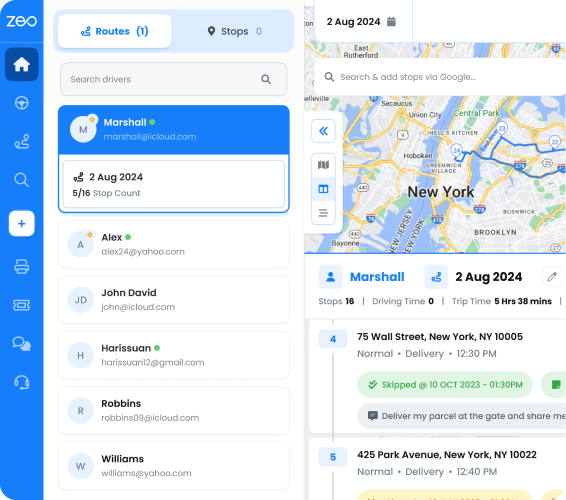
Considérations relatives au transport des matières dangereuses
Certains déchets septiques nécessitent des protocoles de transport de matières dangereuses. Votre logiciel de planification d'itinéraires doit signaler ces exigences et s'assurer que les conducteurs dûment certifiés empruntent les itinéraires appropriés.
Les systèmes numériques gèrent les dossiers de certification des conducteurs et attribuent automatiquement les transports de matières dangereuses aux conducteurs qualifiés. Ils génèrent également l'affichage et la documentation requis pour le transport des déchets réglementés.
Zeo Route Planner facilite la conformité grâce à ses fonctionnalités de capture de photos et de signature numérique, permettant aux conducteurs de documenter les procédures de traitement des déchets et l'acceptation du site d'élimination tout en conservant des enregistrements de localisation vérifiés par GPS pour les rapports réglementaires.
Comparaison des meilleures solutions logicielles de planification d'itinéraires pour camions de vidange de fosses septiques
Le marché des logiciels de planification d'itinéraires propose des dizaines d'options, mais rares sont celles qui prennent en compte les exigences des fosses septiques. Voici comment évaluer les solutions adaptées à vos besoins spécifiques.
Capacités de routage de base
Tous les systèmes prétendent offrir une optimisation basée sur l'IA, mais la qualité de cette optimisation varie considérablement. Testez les systèmes avec les données réelles de vos clients, en tenant compte des contraintes des sites d'élimination et des situations d'urgence.
Les meilleurs systèmes gèrent les situations complexes avec fluidité : que se passe-t-il si votre site d’élimination préféré ferme inopinément ? Comment le système concilie-t-il les interventions d’urgence et la maintenance planifiée ? Peut-il optimiser les itinéraires pour différents types de camions de capacités variées ?
Fonctionnalités spécifiques à l'industrie
Les logiciels de planification d'itinéraires génériques traitent chaque arrêt de la même manière. Les solutions spécialisées dans les fosses septiques, quant à elles, comprennent que les vidanges diffèrent des interventions de maintenance et intègrent les variations de temps de service dans l'optimisation des itinéraires.
Recherchez les systèmes qui prennent en charge les exigences spécifiques aux fosses septiques : suivi de la capacité de la fosse, intégration au site d’élimination, estimation du volume des déchets et documentation de conformité. Ces fonctionnalités distinguent les solutions spécialisées des alternatives génériques.
Intégration et compatibilité
Votre logiciel de planification d'itinéraires doit s'intégrer à vos systèmes d'information existants : logiciels de comptabilité, de gestion de la relation client et d'expédition. Les systèmes autonomes créent des silos de données et nécessitent une saisie de données en double.
Les solutions modernes proposent des connexions API et des intégrations prédéfinies avec les logiciels d'entreprise les plus courants. Elles synchronisent automatiquement les données clients, l'historique des services et les informations de facturation, éliminant ainsi la saisie manuelle de données.
Évolutivité et performances
Choisissez un logiciel évolutif. Une solution conçue pour cinq camions devrait pouvoir en gérer vingt sans perte de performance ni modifications majeures du système.
Basé sur le cloud logiciel de gestion de flotte Ils offrent généralement une meilleure évolutivité que les logiciels de bureau. Ils gèrent automatiquement l'augmentation des volumes de données et du nombre d'utilisateurs, tout en assurant une fiabilité accrue et des mises à jour automatiques.
Exemple de performance dans le monde réel
L'entreprise Mountain View Septic Service, située au Colorado, exploite 12 camions sur un rayon d'intervention de 50 kilomètres. Avant la mise en place d'un logiciel de planification d'itinéraires, ses chauffeurs effectuaient en moyenne 6.2 interventions par jour, parcourant 180 kilomètres par camion.
Après l'adoption d'un système d'itinéraires optimisés, ils ont augmenté leur volume de livraisons à 8.1 par jour tout en réduisant la distance moyenne parcourue par camion à 200 kilomètres. Ce gain d'efficacité de 30 % leur a permis de desservir 30 % de clients supplémentaires sans ajouter de camions, générant ainsi un chiffre d'affaires annuel additionnel de 340 000 $.
Analyse de la structure des coûts
Le prix des logiciels de planification d'itinéraires varie de 30 à 200 $ par mois et par camion, selon les fonctionnalités et les niveaux de service. Calculez le coût total de possession, incluant les frais d'installation, de formation et d'assistance continue.
Comparez le coût de l'abonnement aux économies potentielles liées à une efficacité accrue. La plupart des entreprises d'assainissement constatent que le logiciel d'optimisation des tournées est rentabilisé en 60 à 90 jours grâce à la réduction des coûts de carburant et à l'augmentation de la capacité de travail.
Zeo Route Planner dessert plus de 1.5 million d'utilisateurs dans plus de 150 pays avec une tarification transparente par véhicule qui inclut toutes les fonctionnalités essentielles : optimisation basée sur l'IA, suivi en temps réel, collecte de preuves de service et notifications client sans frais cachés ni limites d'utilisation.
Guide de mise en œuvre : Mise en service de votre système d’évacuation des eaux usées
Le déploiement d'un logiciel de planification d'itinéraires pour l'ensemble de votre flotte exige une planification rigoureuse. Une mauvaise mise en œuvre engendre des coûts inutiles et frustre les conducteurs réticents aux nouvelles technologies.
Phase 1 : Préparation des données et configuration du système
Commencez par organiser votre base de données clients en y incluant des adresses précises, l'historique des services et les exigences particulières. Des données propres garantissent de meilleurs résultats d'optimisation et un lancement système plus fluide.
Importez les informations relatives aux sites d'élimination des déchets, notamment leurs adresses, leurs horaires d'ouverture, leurs limites de capacité et leurs tarifs. Le système a besoin de ces données pour établir des itinéraires réalistes qui tiennent compte des exigences en matière d'élimination.
Configurez les informations relatives à votre flotte : capacités des camions, affectations des conducteurs, zones d’intervention et services proposés. Des données précises garantissent que le système attribue les tâches de manière appropriée.
Phase 2 : Formation et adhésion des conducteurs
Présentez le logiciel de planification d'itinéraires comme un outil facilitant le travail des chauffeurs, et non comme un moyen de surveillance. Mettez l'accent sur les avantages : moins de trajets, moins d'appels pour demander son chemin, notifications automatiques aux clients et simplification des formalités administratives.
Proposez une formation pratique sur des itinéraires et des scénarios réels. Laissez les conducteurs s'exercer avec l'application mobile en utilisant des clients et des lieux familiers. Accompagnez-les dans leur apprentissage technologique avec des instructions pratiques et patientes.
Commencez par désigner vos conducteurs les plus à l'aise avec la technologie comme ambassadeurs du système. Leurs témoignages positifs convaincront les conducteurs sceptiques de l'efficacité du système et de l'amélioration de leur expérience quotidienne.
Phase 3 : Essais pilotes sur des itinéraires limités
Commencez par faire circuler un ou deux camions sur des itinéraires optimisés, tandis que les autres continuent la planification manuelle. Cette approche parallèle vous permet d'affiner les paramètres du système sans perturber l'ensemble des opérations.
Surveillez attentivement les résultats : les itinéraires optimisés sont-ils réellement plus rapides ? Les clients bénéficient-ils d’un meilleur service ? Les chauffeurs effectuent-ils plus de courses par jour ? Utilisez des données réelles pour affiner les paramètres d’optimisation.
Comparer les résultats du projet pilote avec ceux d'itinéraires manuels utilisant les mêmes conducteurs et une clientèle similaire. Documenter les améliorations en termes de temps de trajet, de taux d'achèvement des tâches et de scores de satisfaction client.
Phase 4 : Déploiement complet de la flotte
Une fois les tests pilotes concluants, déployez le logiciel de planification d'itinéraires sur l'ensemble de votre flotte. Mettez en place des systèmes d'assistance pour accompagner les conducteurs dans leur adaptation aux nouvelles procédures.
Surveillez les performances du système pendant la période de transition. Soyez attentif aux possibilités d'optimisation à mesure que le système s'adapte à vos modes de fonctionnement et aux exigences de vos clients.
Tandis que les gestionnaires de flottes utilisent la plateforme web de Zeo pour planifier des itinéraires optimaux en tenant compte des sites d'élimination des déchets et des exigences de conformité, les conducteurs de camions de vidange de fosses septiques reçoivent leurs itinéraires optimisés directement sur l'application mobile, avec les coordonnées du client, les instructions spéciales et une preuve de service facile à collecter.
Phase 5 : Optimisation et fonctionnalités avancées
Une fois la planification des itinéraires de base maîtrisée, explorez les fonctionnalités avancées : notifications automatisées aux clients, planification de la maintenance prédictive et analyse des performances.
Utilisez les données du système pour identifier les pistes d'amélioration. Quels itinéraires sont systématiquement en retard ? Quels clients posent des problèmes de planification ? Quels sites d'élimination des déchets offrent la meilleure efficacité ?
L'optimisation régulière du système permet de maintenir des performances optimales à mesure que votre entreprise se développe et que les habitudes de vos clients évoluent. Planifiez des analyses mensuelles de l'efficacité des itinéraires et de l'utilisation du système.
Pièges courants à éviter lors de la mise en œuvre
Ne précipitez pas le déploiement du système. Une formation insuffisante engendre la frustration des conducteurs et un faible taux d'adoption. Prévoyez suffisamment de temps pour l'apprentissage et l'adaptation.
Évitez de trop personnaliser les paramètres au départ. Commencez par les réglages d'optimisation standard et ajustez-les en fonction des performances réelles plutôt que de préférences théoriques.
Ne négligez pas les retours des chauffeurs. Ils comprennent les difficultés pratiques liées à la planification des itinéraires, des difficultés que les gestionnaires de bureau pourraient ignorer. Leurs observations contribuent à améliorer la configuration du système et à favoriser son adoption.
Questions fréquemment posées
Q : Quel est le coût moyen par véhicule d'un logiciel de planification d'itinéraires pour camions de vidange de fosses septiques ?
La plupart des logiciels d'optimisation d'itinéraires pour camions de vidange coûtent entre 30 et 200 $ par mois et par véhicule, selon les fonctionnalités et les niveaux de service. Il faut calculer le coût total de possession, incluant les frais d'installation et de formation. Cependant, la plupart des entreprises de vidange constatent que le logiciel est rentabilisé en 60 à 90 jours grâce aux économies de carburant et à l'augmentation de la capacité d'intervention.
Q : Quel est le plus grand défi lié à la planification manuelle des itinéraires des fosses septiques ?
Le principal défi consiste à coordonner les visites aux sites d'élimination des déchets avec les itinéraires des clients, car les camions de vidange doivent se vider dans des installations de traitement des déchets ayant des horaires d'ouverture et des capacités limités. La planification manuelle entraîne souvent des allers-retours inutiles entre les sites d'élimination, ce qui représente une perte de temps supplémentaire de 40 %.
Q : Les logiciels de routage peuvent-ils gérer les urgences liées aux fosses septiques et les appels de dernière minute ?
Les logiciels de planification d'itinéraires avancés pour camions de vidange de fosses septiques, tels que Zeo Route Planner, offrent un suivi GPS en temps réel et un recalcul instantané des itinéraires, identifiant automatiquement le camion disponible le plus proche en cas d'urgence. Le système ajuste les itinéraires des deux conducteurs tout en calculant l'impact sur les délais d'arrivée pour les clients programmés.
Q : Quels documents de conformité sont requis pour le transport des déchets septiques ?
Le ministère des Transports exige des registres détaillés comprenant les heures de départ et d'arrivée, les volumes de déchets, les lieux d'élimination et les documents relatifs à la chaîne de traçabilité. Les systèmes numériques éliminent les risques de non-conformité en enregistrant automatiquement les données requises grâce à une vérification GPS conforme aux exigences réglementaires.
Q : Combien de carburant un itinéraire optimisé peut-il permettre d'économiser aux camions de vidange de fosses septiques ?
Les camions de vidange de fosses septiques consommant en moyenne 6 à 8 miles par gallon peuvent économiser de 15 à 25 miles par camion et par jour grâce à une optimisation de 30 % de leurs itinéraires. À 3.50 $ le gallon de diesel, cela représente une économie de carburant de 7 à 12 $ par jour et par camion, soit de 12 775 $ à 21 900 $ par an pour une exploitation de cinq camions.
Transformez dès aujourd'hui vos opérations d'entretien de fosses septiques
Un logiciel d'optimisation des tournées de camions de collecte des eaux usées transforme les plannings quotidiens chaotiques en opérations optimisées et rentables. La réduction de 30 % du temps de trajet, la simplification de la logistique d'élimination des déchets et le suivi automatisé de la conformité permettent d'obtenir un retour sur investissement mesurable en quelques mois.
Vos concurrents optimisent déjà leurs itinéraires pendant que vous vous débattez encore avec des plans papier et des appels téléphoniques. Chaque jour de retard engendre des coûts supplémentaires : carburant gaspillé, opportunités manquées et clients mécontents.
Démarrez votre essai gratuit de Zeo Route Planner et découvrez comment les entreprises d'assainissement économisent plus de 2 heures par jour tout en améliorant la satisfaction de leurs clients. Rejoignez plus de 1.5 million d'utilisateurs qui ont constaté que les logiciels de routage intelligents sont rentables tout en simplifiant les opérations, et non en les compliquant.
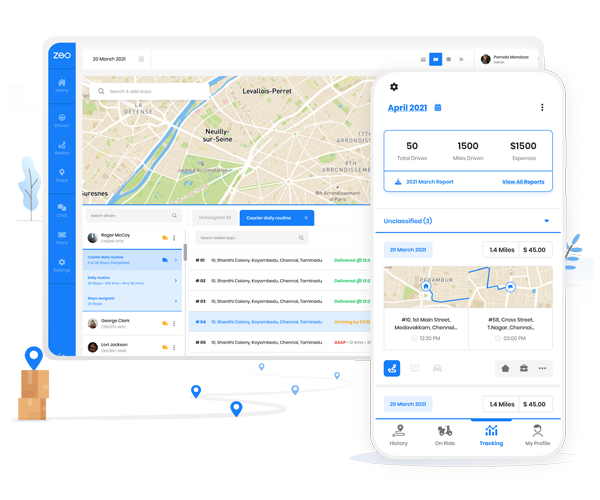
Êtes-vous propriétaire d'une flotte?
Vous souhaitez gérer facilement vos chauffeurs et vos livraisons ?
Développez votre entreprise sans effort avec Zeo Routes Planner : optimisez les itinéraires et gérez plusieurs conducteurs en toute simplicité.
augmenter les économies de carburant
Économisez 2 heures sur les livraisons, tous les jours !
Optimisez les itinéraires avec notre algorithme, réduisant ainsi efficacement le temps et les coûts de trajet.
Commencez gratuitement